Concentrations & Electives

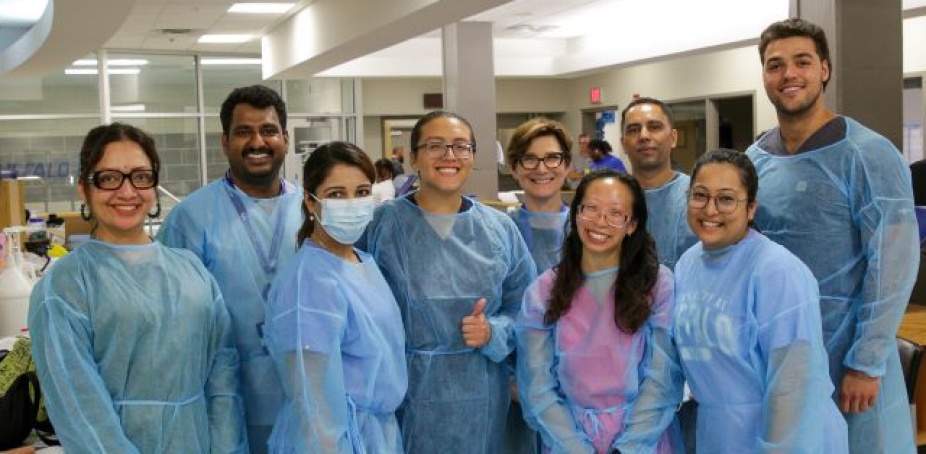
The Academic Concentration (formerly Minors) Program was established in 1972 to enable students to concentrate and expand their studies in disciplines of particular interest to them. Such efforts may later be used to enhance career goals, such as the emphasis on a particular area of interest in a general practice setting or, in some cases, the pursuit of specialty training.
The term "concentration" in this context denotes the completion of a minimum number of hours in a particular area of dentistry of the student’s choice, beyond that required of all students in the DDS program and is distinct from “minors” as used in baccalaureate programs and every graduate's general dentistry "major."
On This Page
Oral Biology Concentration
The goals of this program are to foster scholarly student activity through a structured, organized, and supportive framework, while enhancing students’ ability to think analytically and independently and to strengthen their problem-solving skills.
Additional objectives include encouraging students who begin research early in the D.D.S. program to advance their projects toward meaningful completion, and providing exposure to faculty role models to inspire consideration of academic career pathways.
| ORB545 | Dynamic of Bone |
|---|---|
| ORB500 | Cranio Dev, Tissue Eng & Oral |
| ORB510 | Saliva and the Microbiome |
| OS512 | Research Design |
Oral Diagnostics Sciences Concentration
The purpose of this program is to develop a deeper understanding of the integration of four disciplines: oral radiology, oral pathology, oral medicine and orofacial pain in the diagnosis and treatment of our patients.
Using case-based platform presentations and discussions, emphasis will be placed on various aspects of diagnostic methodologies and evidence-based treatment plans and protocols to build upon dental medicine fundamentals for patient care.
| ODS854 | ODS Seminar |
|---|---|
| Clinic | TMD and Orofacial Pain clinic |
| Clinic | Clinical Oral Pathology clinic |
| Seminar | Radiology clinic/seminar |
Oral and Maxillofacial Surgery Concentration
A concentration in oral and maxillofacial surgery (OMFS) is offered to senior students who are considering the specialty as a career.
Enrollment is limited to individuals who will be applying to oral and maxillofacial surgery residency training programs for specialty education.
| OSU871 | Independent Study |
|---|---|
| Rounds | Tuesday Morning Grand Rounds |
| Conference | Case Conferences |
| Conference | Preoperative Conferences |
| Seminar | Orthognathic/Orthodontic Seminars |
| Seminar | Pathology Seminar |
| Lit Review | OMS Literature Review |
Periodontics Concentration
The concentration in Periodontics is designed for students interested in obtaining additional clinical and didactic experience in periodontics.
This is of particular value for students contemplating a general dental practice in which periodontics will play an important role, as well as for students considering specialty training in periodontics.
| PER855 | Problem-Solving in Periodontal Therapy |
|---|---|
| PER914 | Postgraduate Treatment Planning |
| PDO840 | Elective Clinic |
| ORB545 | Dynamics of Bone |
| RDN853 | Advanced Prosthodontics - General Dentist |
| RDN855 | Sports Dentistry |
| RDN861 | Dental Practice Mgmt |
| OS812 | Res Design Oral Sciences |
| OSU866 | Oral Surgery Elective |
| Ind. Study | Independent Study |
Prosthodontics Concentration
Prosthodontics is the specialty of esthetic, implant and reconstructive dentistry. The prosthodontics concentration is designed for students interested in additional clinical and didactic experience in these areas of restorative dentistry, and to introduce students to prosthodontics as a specialty.
This program is particularly intended for students who demonstrate above-average interest and ability in all phases of restorative dentistry and have a keen interest in this discipline.
| RDN853 | Advanced Prosthodontics for the General Dentist |
|---|---|
| RDN900 | Advanced Clinical Treatment Planning and Clinical Case |
| RDN859 | Fixed Prosthodontics: The Inter-Disciplinary Specialty |
| RDN867 | Implant Dentistry Seminar |
Emerging Educators in Academic Dentistry
Students will serve as a peer instructor in the lab component of a preclinical course. Selection of the type of lab course (e.g., dental anatomy or one of the discipline-based preclinical labs) can be developed by each student in collaboration with the preclinical course directors. The goal is to provide the student with meaningful exposure to preclinical teaching. The student/instructor will primarily provide hands-on coaching for less experienced peers as they work on lab assignments during this component.
| RDN 802 | Dental Anatomy |
|---|---|
| RDN 809 | Cariology and Direct Restoration I |
| RDN 811 | Cariology and Direct Restoration II |
| RDN 813 | Indirect Restorations I |
| RDN 814 | Indirect Restorations II |
| RDN 824 | Removable Prosthodontics I |
| RDN 826 | Removable Prosthodontics II |
| PER 812 | Endodontics Preclinic |
Additional Electives Offered
Click the expanders below to view full course descriptions.
This course introduces the field of dental sleep medicine, an area of great interest and growth in dentistry today. We will cover the science of sleep, including sleep physiology and sleep disorders, with a focus on obstructive sleep apnea and how to interpret a sleep study.
Students will learn the treatment options for snoring and sleep apnea, including the dentist’s role in diagnosis and treatment with oral appliances. With an emphasis on clinical practice, we will discuss appliance selection and application, relationships with physicians and dental labs, medical and dental insurance considerations, and practice management.
This course offers clinical exposure to patients with intellectual/developmental disabilities (IDD) and complex medical history in the ambulatory and operating room settings. In addition, didactic lectures will provide insight into the intricacies of treating the dental patient with special needs. This exposure will encourage those interested to seek further training after graduation.
In this course, Graduate Students and Postdoctoral Fellows are tasked with presenting an article each semester using PowerPoint, followed by a group discussion led by audience questions. Faculty members from the Department of Oral Biology participate in these discussions.
Occasionally, students will present their ongoing research for feedback and advice. One session per semester focuses on professional development, including grant writing and funding opportunities, featuring guest speakers and roundtable discussions with Oral Biology faculty.
The cell and molecular biology of bone is presented with special emphasis on the interactions involved in bone remodeling. Hormonal and growth factor effects are discussed with emphasis on signalling mechanisms and cytokine production. Pathophysiology and therapeutic intervention is studied with respect to cellular and molecular effects.
This course is designed to deepen your understanding of polymers, metals, and ceramics used in the restoration of oral health. It focuses on the characterization methods for these materials, as well as an introduction to the regulatory aspects of dental and biomedical products. In addition to covering the properties and applications of these materials, the course ensures that students are equipped with the knowledge needed to navigate their practical use and adhere to relevant regulations in dental and biomedical fields.
PER 914 focuses on multidisciplinary treatment planning and implant dentistry through seminars involving case presentations, literature reviews, and evidence-based discussions. Designed for postgraduate periodontics and prosthetics students, it is also open to AEGD and predoctoral students with permission. Mandatory registration for postgraduate periodontics students is required throughout their clinical program (minimum of 6 semesters). Offered each semester.
This senior-level elective aims to introduce the student to an array of more advanced and current topics in prosthodontics not covered to great extent in the present curriculum. The object is to present evidence-based information to augment the basic prosthodontic curriculum with a number of contemporary topics.
This course provides an overview of the prevention, diagnosis, and management of orofacial injuries related to athletic participation. Students explore the role of the dentist as part of the interdisciplinary sports medicine team, with emphasis on injury prevention strategies, risk assessment, and emergency preparedness.
The purpose of this course is to develop a deeper and broader understanding of contemporary restorative dental techniques, materials and treatments than is currently taught in other restorative courses. In-depth case presentations and discussion regarding preparation design and material choice for direct and indirect anterior and posterior restoration will be covered, including elective procedures such as veneers. Emphasis will be placed on non-metallic restoration of the adult dentition with an eye towards a superior esthetic and functional outcome.
This course is designed to introduce dental students to the foundations of academic dentistry and to cultivate interest in careers as clinician-educators, researchers, and academic leaders. Through a structured and supportive framework, students explore the roles and responsibilities of faculty in predoctoral education, research, service, and administration.
Provides the student dentist with an overview of the forensic sciences, with an emphasis on forensic odontology. Student will gain insight into the field and be able to make a determination if they are interested in further training upon graduation.
This course offers clinical exposure to patients with intellectual/developmental disabilities (IDD) and complex medical history in the ambulatory and operating room settings. In addition, didactic lectures will provide insight into the intricacies of treating the dental patient with special needs. This exposure will encourage those interested to seek further training after graduation.
This course is a combination of lectures, student presentations and discussions, focused on current research advancements in the fields of salivary gland biology and oral microbial ecology. The course will be divided into two units. Unit one will focus on fundamental principles of salivary gland development, function and diseases affecting the gland. Unit two will focus on microbes of the oral cavity including microbial- related diseases of the oral cavity, host responses to these diseases and the oral microbiome.
This course is designed as a graduate level (Master, PhD) course on concepts in immunology that are applicable to oral biology. It emphasizes oral aspects of humoral and cell mediated immunity, covering topics such as oral vaccines, mucosal immunity, genetic basis of normal function as well as aberrations in immunological mediators, and host responses in oral diseases. The students are expected to have a basic knowledge of immunology although a review session on basic immunological concepts is provided at the beginning of the course.
Emphasis is placed on the aspects of immunology that are directly pertinent to the pathogenesis, diagnosis, treatment and prophylaxis of inflammatory condition and diseases associated with the oral cavity and with oral biology. Although lectures based, the course relies heavily on research-based current literature and the students are expected to derive information from that literature and present a review of some of those papers in the last portion of the course. Discussion or medical and research topics is part of the course and the students are also evaluated on that basis.
Emphasis will be placed upon diagnosis and treatment planning, occlusion and the periodontic, endodontic, and implant considerations in Advanced Fixed Prosthetic Treatment with an opportunity to integrate all the disciplines into a “Total Clinical Approach”. A differentiation will be made in covering philosophy and techniques with Advanced “Esthetic”, “Crown and Bridge”, “Periodontal Prosthesis” and “Implant” cases. Smile Makeover concepts and techniques will be covered.
Tips and Tricks will be detailed on Tooth Preparation based on restorative material selection, on Temporization techniques and utilization of Temporary Acrylic and Bis-GMA materials for Provisional Crowns and Bridges, and on Impression Techniques including soft-tissue diode laser options.