
Diaz Lab

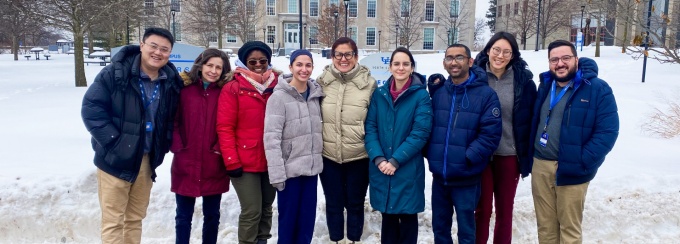
Members of the Diaz lab, from left: Lu Li, Sylvie Cuvelle, Geburah Fatnumbi, Madison Muriel, Patricia Diaz, Hafsa Shah, Md Hasanuzzaman, Dam Soh and Pedro Silva.
Welcome to the Diaz Lab! Learn more about us below.
Principal Investigator

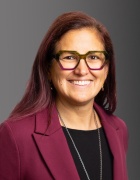
Patricia Diaz, DDS, MSc, PhD, is the Empire Innovation Professor of Oral Biology and the Sunstar Robert J. Genco Endowed Chair at the School of Dental Medicine and also serves as director of the Microbiome Center at the University at Buffalo.
Dr. Diaz’s research, supported by grants from NIH and industry, focuses on the ecology of oral microbiome communities and their interactions with the host in health and disease. Dr. Diaz employs an integrative methodology that encompasses clinical studies, animal models, high-throughput assays and bioinformatics. Her pioneering work has significantly advanced our understanding of the role of the microbiome in periodontal disease and the manner in which the microbiome contributes to oral comorbidities associated with cancer treatment, such as oral mucositis and candidiasis.
Dr. Diaz obtained her dental degree at CES University in Colombia and pursued her PhD in microbiology at the University of Adelaide, Australia. Following this, she undertook a postdoctoral fellowship in oral microbiology at the NIDCR/NIH before earning her certificate in periodontology and master's in oral science at the University of North Carolina at Chapel Hill.
Dr. Diaz is committed to creating open research opportunities for students from disadvantaged backgrounds, ensuring equitable access to the field and fostering diversity in oral health research. She is a fierce advocate for and mentors women research scientists, addressing barriers and empowering them to achieve success in their endeavors.
Our Focus
The Diaz Lab investigates the ecology of oral microbial communities and their interactions with the host in health and disease. The group has led pioneering studies elucidating the ecological drivers and pathological consequences of dysbiosis in the oral microbiome, with a particular focus on the microbial and environmental factors that govern community maturation and the emergence of pathobionts.
An additional area of interest is the role of the oral microbiome as a modifier of mucosal responses to chemotoxic injury. To address these questions, the laboratory employs an integrative and highly translational approach that tightly couples clinical studies with animal models, high-throughput molecular assays, and advanced computational and bioinformatic analyses.
Key discoveries from the Diaz Laboratory include:
- Defining oral microbiome structure in health and disease. The Diaz Lab was among the first to apply high-throughput sequencing approaches to comprehensively characterize subgingival microbial communities and compare microbiome structure across periodontal health, gingivitis, and periodontitis. This work provided foundational insights into disease-associated shifts in community composition and identified microbial species linked to health and disease. These studies also led to the identification of a set of core subgingival species hypothesized to function as metabolic anchors that shape community stability and ecological dynamics.
- Mechanistic insights into interspecies interactions and pathogen emergence. Work from the Diaz Lab established that cell density is a critical determinant of colonization and virulence of the periodontal pathogen Porphyromonas gingivalis and revealed key interspecies interactions that enable its outgrowth in vivo. Although P. gingivalis exhibits limited pathogenic potential at low cell density, its partnership with the commensal Veillonella parvula permits successful colonization from small inocula through a mechanism mediated by a diffusible signaling molecule currently under investigation. Complementary studies demonstrated that Fusobacterium nucleatum supports P. gingivalis growth by mitigating oxidative stress and supplying carbon dioxide. Together, these findings support a model in which core subgingival species play essential roles in community maturation and pathogen expansion.
- Microbiome contributions to oral mucositis and chemotoxic injury. Beyond periodontal disease, the Diaz Laboratory studies oral comorbidities associated with cancer therapy, including oral mucositis. This work has helped define how chemotherapy-induced shifts in microbial communities intersect with host inflammatory and epithelial responses, positioning the oral microbiome as an important modifier of mucosal injury and repair.
- Clinical and translational periodontal research. The laboratory conducts clinical studies and trials evaluating adjunctive antiplaque therapies and characterizing microbiome responses across distinct forms of periodontitis. These efforts leverage advanced computational approaches to quantify microbiome variability across large populations and to define microbial and ecological signatures associated with therapeutic response.
Meet the Team
- Sylvie Cuvelle, PhD, research scientist and project coordinator. Dr. Cuvelle oversees sample processing and analysis in collaborative microbiome studies. Her own research focuses on identifying small molecules that promote growth of P. gingivalis from low cell-density.
- Geburah Fatunmbi, PhD, postdoctoral fellow. Dr. Fatunmbi is co-mentored by Dr. Diaz and Dr. Mira Edgerton and studies how inter-species interactions modify Candida albicans virulence potential.
- Rohan Grant, PhD candidate at the University of the West Indies. Rohan is supported by a D43 training grant and is co-mentored by Dr. Diaz and Dr. Paul Brown. His work focuses on establishing biobanks of clinical isolates from subgingival plaque samples to study strain genotypic and phenotypic variability.
- Md. Hasanuzzaman, PhD candidate. Hasan's PhD focuses on evaluating the role of the microbiome as a modifier of mucosal responses to cancer treatment through a clinical study in collaboration with Roswell Park Comprehensive Cancer Center.
- Lu Li, PhD, postdoctoral fellow and lead bioinformatician, supported by a K99/R00 Pathway to Independence Award (NIH). Dr. Li develops and applies advanced computational approaches to better understand the relationship of the microbiome with periodontitis phenotypes.
- Madison Muriel, MA, DDS student. Madison completed her master's in the lab and continues her research during dental school studying the pathophysiology of oral mucositis.
- Hafsa Shah, DDS, master's in oral science student. Dr. Shah is establishing strain biobanks of clinical isolates from subjects undergoing cancer treatment to evaluate inter-species interactions with Candida albicans.
- Pedro Silva, DDS, PhD, postdoctoral fellow. Dr. Silva studies oral mucosa responses to chemotoxic injury utilizing animal and in vitro mucosal models.
- Dam Soh, DDS, MS, periodontology resident and PhD candidate, supported by K-12 training grant (NIH). Dr. Soh's work focuses on identifying species that antagonize the growth of the pathogen P. gingivalis.
Active Projects
- Defining the pathophysiology of oral comorbidities of cancer treatment. Through clinical studies in collaboration with Roswell Park Comprehensive Cancer Center, we are studying factors associated with the development of oral mucositis and candidiasis during cancer therapy. We are particularly interested in understanding the role of the microbiome as a modifier of mucosal responses to chemotoxic injury. These clinical epidemiological studies are complemented with animal and in vitro mucosal model where we dissect mechanisms behind mucosal responses. Funding: R01DE032131-01, NIH/NIDCR. Title: "Host and microbial risk factors of oral thrush in cancer patients receiving chemotherapy."
- Studying ecological factors and inter-species interactions that affect growth and virulence of the periodontal pathogen Porphyromonas gingivalis. This project focuses on identifying small molecules that promote the replication of P. gingivalis from low cell-density populations. These metabolites originate from P. gingivalis itself, and accumulate to a threshold level to promote its own growth, or are derived from partner species such as Veillonella parvula. We are also interested in identifying antagonistic interactions to inhibit P. gingivalis colonization. Funding: R21DE034093-01A1; NIH/NIDCR. Title: “Identification of diffusible small molecules that regulate replication of Porphyromonas gingivalis.”
- Defining microbiome variability in relation to periodontitis phenotypes and microbiome responses to periodontal therapies. With the use of advanced computational approaches, the lab continues to investigate subgingival microbiome distributions across large cohorts and in relation to host phenotypes, with the goal of defining different community configurations associated with disease and evaluating responses to periodontal therapies. We are also interested in understanding intra-species variability and strain distributions and their relevance to subgingival dysbiosis.
- Oral-gastrointestinal microbiome axis. This project focuses on defining the colonization dynamics across the gastrointestinal tract in states of oral and systemic health or disease.
View a complete list of publications on the NCBI website.
- Hussein M, Barua A, Qasaimeh M, Smardz M, Diaz PI, Hatzikirou H. Ecological and Stochastic Determinants of the Growth and Persistence of the Oral Pathogen Porphyromonas gingivalis. bioRxiv. 2025 Nov 10;. doi: 10.1101/2025.11.08.687400. PubMed PMID: 41292860; PubMed Central PMCID: PMC12642222.
- Li L, Smardz M, Soh D, Marsh PD, Hoare A, Diaz PI. The Impact of Serum on a Complex Synthetic Community Model of the Subgingival Microbiome. bioRxiv. 2025 Oct 8;. doi: 10.1101/2025.10.07.681017. PubMed PMID: 41279900; PubMed Central PMCID: PMC12632320.
- Li L, Hayashi-Okada Y, Falkner KL, Shimizu Y, Zambon JJ, Kirkwood KL, Schifferle RE, Genco RJ, Diaz PI. Effect of an intensive antiplaque regimen on microbiome outcomes after nonsurgical periodontal therapy. J Periodontol. 2025 Mar;96(3):241-254. doi: 10.1002/JPER.24-0141. Epub 2025 Feb 10. PubMed PMID: 39925335.
- Li L, Hayashi-Okada Y, Falkner KL, Cervi S, Andrusz S, Shimizu Y, Zambon JJ, Kirkwood KL, Schifferle RE, Diaz PI. Randomized Trial to Test a Chemo-Mechanical Antiplaque Regimen as Adjunct to Periodontal Therapy. JDR Clin Trans Res. 2024 Apr;9(2):160-169. doi: 10.1177/23800844231167065. Epub 2023 May 6. PubMed PMID: 37148266.
- Li L, Sohn J, Genco RJ, Wactawski-Wende J, Goodison S, Diaz PI, Sun Y. Computational approach to modeling microbiome landscapes associated with chronic human disease progression. PLoS Comput Biol. 2022 Aug;18(8):e1010373. doi: 10.1371/journal.pcbi.1010373. eCollection 2022 Aug. PubMed PMID: 35926003; PubMed Central PMCID: PMC9380910.
- Abusleme L, Hoare A, Hong BY, Diaz PI. Microbial signatures of health, gingivitis, and periodontitis. Periodontol 2000. 2021 Jun;86(1):57-78. doi: 10.1111/prd.12362. Epub 2021 Mar 10. Review. PubMed PMID: 33690899.
- Hoare A, Wang H, Meethil A, Abusleme L, Hong BY, Moutsopoulos NM, Marsh PD, Hajishengallis G, Diaz PI. A cross-species interaction with a symbiotic commensal enables cell-density-dependent growth and in vivo virulence of an oral pathogen. ISME J. 2021 May;15(5):1490-1504. doi: 10.1038/s41396-020-00865-y. Epub 2020 Dec 28. PubMed PMID: 33372193; PubMed Central PMCID: PMC8115154.
- Diaz PI. Subgingival fungi, Archaea, and viruses under the omics loupe. Periodontol 2000. 2021 Feb;85(1):82-89. doi: 10.1111/prd.12352. Epub 2020 Nov 23. Review. PubMed PMID: 33226731.
- Diaz PI, Dongari-Bagtzoglou A. Critically Appraising the Significance of the Oral Mycobiome. J Dent Res. 2021 Feb;100(2):133-140. doi: 10.1177/0022034520956975. Epub 2020 Sep 13. Review. PubMed PMID: 32924741; PubMed Central PMCID: PMC8173349.
- Curtis MA, Diaz PI, Van Dyke TE. The role of the microbiota in periodontal disease. Periodontol 2000. 2020 Jun;83(1):14-25. doi: 10.1111/prd.12296. Review. PubMed PMID: 32385883.
- Hong BY, Hoare A, Cardenas A, Dupuy AK, Choquette L, Salner AL, Schauer PK, Hegde U, Peterson DE, Dongari-Bagtzoglou A, Strausbaugh LD, Diaz PI. The Salivary Mycobiome Contains 2 Ecologically Distinct Mycotypes. J Dent Res. 2020 Jun;99(6):730-738. doi: 10.1177/0022034520915879. Epub 2020 Apr 21. PubMed PMID: 32315566; PubMed Central PMCID: PMC7243416.
- Diaz PI, Valm AM. Microbial Interactions in Oral Communities Mediate Emergent Biofilm Properties. J Dent Res. 2020 Jan;99(1):18-25. doi: 10.1177/0022034519880157. Epub 2019 Oct 7. PubMed PMID: 31590609; PubMed Central PMCID: PMC6927214.
- Diaz PI, Hong BY, Dupuy AK, Choquette L, Thompson A, Salner AL, Schauer PK, Hegde U, Burleson JA, Strausbaugh LD, Peterson DE, Dongari-Bagtzoglou A. Integrated Analysis of Clinical and Microbiome Risk Factors Associated with the Development of Oral Candidiasis during Cancer Chemotherapy. J Fungi (Basel).2019 Jun 13;5(2). doi: 10.3390/jof5020049. PubMed PMID: 31200520; PubMed Central PMCID: PMC6617088.
- Hong BY, Sobue T, Choquette L, Dupuy AK, Thompson A, Burleson JA, Salner AL, Schauer PK, Joshi P, Fox E, Shin DG, Weinstock GM, Strausbaugh LD, Dongari-Bagtzoglou A, Peterson DE, Diaz PI. Chemotherapy-induced oral mucositis is associated with detrimental bacterial dysbiosis. Microbiome. 2019 Apr 25;7(1):66. doi: 10.1186/s40168-019-0679-5. PubMed PMID: 31018870; PubMed Central PMCID: PMC6482518.
In the News
Contact the Lab
Open Positions
Please email Dr. Patricia Diaz at pdiazmo@buffalo.edu to inquire about opportunities in the Diaz Lab.
Location: 347 Biomedical Research Building, South Campus, Buffalo, NY 14214
Laboratory Phone Number: 716-829-5822